Introduction
Your chimney works hard. Rain, wind, frost, and heat from fires all take their toll. Over time, every chimney needs some level of repair.
But because chimneys are high up and out of sight, problems often go unnoticed until water comes down the chimney or bricks start falling.
The good news: most chimney problems are easy to fix if you catch them early. The bad news: ignored chimney issues lead to structural damage, damp inside your home, and expensive repairs.
This guide helps you spot chimney problems before they become emergencies.
7 Signs Your Chimney Needs Repair
1. Cracked or missing mortar between bricks
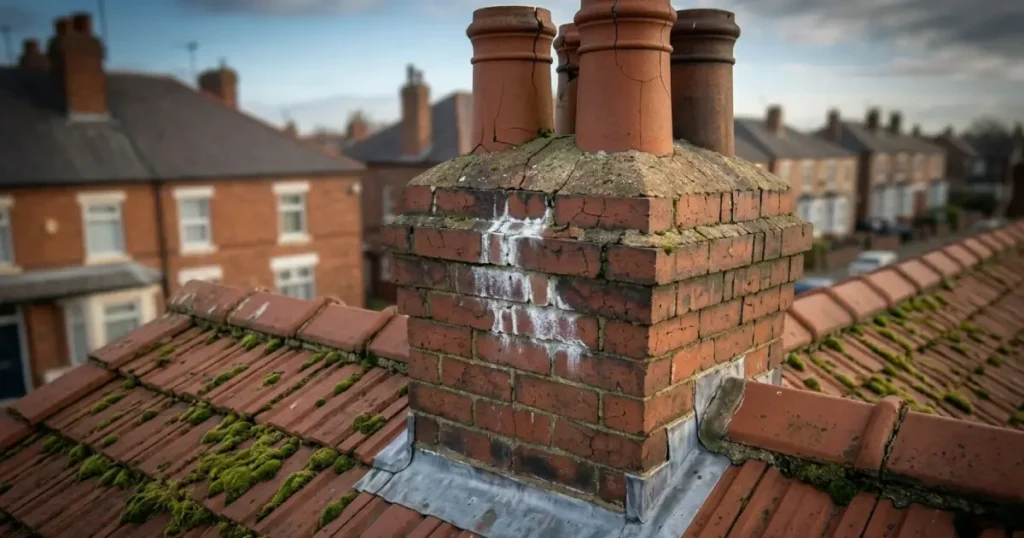
Mortar holds bricks together. When it cracks, crumbles, or falls out (called “pointing failure”), water gets into the brickwork. In winter, freezing water expands and cracks bricks further.
2. White staining on bricks
White, fluffy stains (efflorescence) mean water is moving through your chimney and depositing salts. It’s a clear sign of moisture penetration.
3. Damp patches on your chimney breast inside
If you see a damp patch on your living room wall near the chimney, water is getting in from outside. This won’t dry out on its own – the source must be fixed.
4. Loose or leaning chimney stack
A chimney that leans or has loose bricks is dangerous. It can collapse onto your roof or, worse, onto someone below.
5. Water running down your chimney (or into your fireplace)
Rainwater coming down the chimney means the fla shing (the metal seal around the chimney base) or the chimney pot is damaged.
6. Rust on your damper or fireplace
If you have a metal damper inside your chimney and it’s rusty, moisture is getting in regularly.
7. Birds or squirrels entering your chimney
If animals are getting in, your chimney cowl or cap is missing or damaged. They’ll also bring nesting material that blocks airflow.
If you see any of these signs, don’t wait. Chimney problems only get worse with time.
Common Chimney Problems and Their Causes
Flashing failure (most common)
Lead flashing seals the gap between your chimney and roof. Over time (20-30 years), flashing cracks or pulls away from the brickwork. Water runs down the chimney exterior and finds its way inside.
Pointing deterioration
Mortar between bricks naturally erodes over decades. When pointing fails, water enters the brickwork. In winter, freeze-thaw cycles crack bricks.
Missing or damaged chimney pot
Chimney pots crack in storms or simply wear out. A damaged pot lets rain pour straight down your chimney.
Missing chimney cowl
A cowl fits over the pot to stop rain and birds. Without one, rain falls directly into your flue.
Leaning stack
Foundations settle, bricks deteriorate, or storm damage causes the entire stack to lean. This is serious – don’t delay repair.
Cracked bricks
Once water gets into bricks and freezes, bricks crack. Cracked bricks need replacement, not just repointing.
Chimney Repair Options – What’s Usually Needed?
Repointing (small to medium repair)
Removing old, crumbling mortar and replacing it with new weatherproof mortar. Cost-effective and restores strength. Takes 1-2 days.
Flashing replacement (medium repair)
Removing old lead flashing and installing new, properly sealed flashing. Essential for stopping leaks where chimney meets roof.
Brick replacement (medium repair)
Cutting out cracked or spalling (flaking) bricks and installing new ones matched to your chimney. Often done alongside repointing.
Chimney stack rebuild (large repair)
If the chimney is severely damaged or leaning, partial or full rebuild is needed. This is major work but cheaper than a collapsed chimney through your roof.
Cowl and pot replacement (small repair)
Simple, quick fix that stops rain and birds entering your chimney.
Chimney Inspection – What We Check
When we inspect your chimney, here’s what we look for:
From ground level using binoculars or drone:
Leaning stack
Missing or damaged pots and cowls
Cracked or missing bricks
Gaps between flashing and bricks
From your roof (safe access only):
Flashing condition around entire chimney base
Pointing quality on all sides
Brick integrity (no flaking or cracking)
Chimney crown (top surface) condition
From inside your home:
Damp patches on chimney breast
Smoke testing (if fireplace is used)
Damper condition
After inspection, we provide a clear report and quote – no obligation.
Can You Repair a Chimney Yourself?
No. Chimney repair is not a DIY job.
Reasons to hire a professional:
Working at height on a chimney is extremely dangerous
Chimney repairs require specialist mortar and techniques
Incorrect flashing causes worse leaks than before
Structural chimney problems can collapse without warning
Professional work includes guarantees
Even small chimney repairs like repointing or replacing a cowl require ladders, safety equipment, and knowledge of how chimneys work.
Leave chimney repairs to insured, experienced roofers.
How Much Do Chimney Repairs Cost? (Rough Guide – No Exact Prices)
Costs vary based on the problem, chimney size, and roof access. But here’s a general range:
Cowl or pot replacement: less than a new TV
Repointing one side: less than a new washing machine
Flashing replacement: less than a new sofa
Brick replacement: less than a new phone
Full rebuild: more, but cheaper than a collapsed roof
The exact cost depends on your specific chimney. We provide free, detailed quotes after inspection.
Preventing Future Chimney Problems
After repairs, protect your chimney with simple maintenance:
Annual visual check – From the ground, look for changes or new cracks.
Keep trees trimmed – Branches rubbing against chimneys cause damage.
Check after storms – High winds can loosen pots or cowls.
Use your fireplace properly – Burn dry, seasoned wood to reduce moisture and tar.
Schedule professional inspection every 2-3 years – Catch small issues before they become big repairs.
FAQ – Chimney Repair Questions
1. How long does chimney repointing last?
Properly done repointing using modern weatherproof mortar lasts 25-40 years.
2. Can a leaning chimney be fixed without full rebuild?
Sometimes. Steel reinforcement (helical bars) can stabilise moderate leaning. But significant leaning usually needs rebuild.
3. Will chimney repair stop damp on my chimney breast?
If the damp is caused by flashing failure, cracked bricks, or failed pointing – yes. If damp is from condensation inside your home, you need ventilation improvements too.
4. Do I need scaffolding for chimney repair?
For single-storey chimneys, a strong ladder may be enough. For two-storey homes or major repairs, scaffolding is safer and sometimes required.
5. How long does chimney flashing last?
Lead flashing typically lasts 30-50 years. When it fails, replacement is the only real solution.
6. What’s a chimney cowl and do I need one?
A cowl fits over your chimney pot to stop rain entering and birds nesting. Every chimney should have one.
7. Can you repair a chimney in winter?
Yes, but freezing temperatures affect mortar. We use frost-proof mortar or wait for milder days.
8. How do I book a chimney inspection in West London?
Call 07507 819298 or email thedhillonthegreat@gmail.com. We serve Hounslow, Hillingdon, Ealing, Richmond, and all surrounding areas.
Conclusion
Your chimney is part of your roof system. When it fails, water enters your home and structural damage begins.
Don’t wait for bricks to fall or damp to spread.
Check your chimney today: Look for cracked mortar, white staining, leaning, or damaged pots. If you see anything worrying, call a professional.
Small chimney repairs now prevent large chimney disasters later.
Need Chimney Repair in West London?
Don’t let a damaged chimney cause damp, leaks, or structural problems.
📞 Call Us on 07507 819298
📧 thedhillonthegreat@gmail.com
📍 Based in Hounslow TW5 – serving all West London
Free chimney inspection. Clear quote. 5-year guarantee on repairs.